A modern lever for effective healthcare follow-up
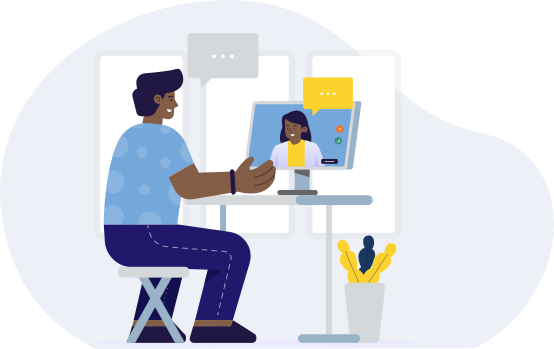
Medical teleconsultation, which allows patients to consult healthcare professionals remotely via digital tools, has today become an essential solution in the medical landscape. It is no longer limited to emergencies or rural areas: it is now a full-fledged tool for monitoring, prevention, and medical guidance.
1. Easier Medical Follow-Up
For patients with chronic illnesses such as diabetes, hypertension, or asthma, teleconsultation enables regular follow-up without the need to travel. Check-up appointments can be scheduled remotely, with test results and health measurements (like blood sugar and blood pressure) shared in real time. This approach improves treatment adherence and reduces the risk of complications.
2. A Powerful Tool for Prevention
Prevention depends on regular communication between patient and doctor. Thanks to teleconsultation, early warning signs of illness can be detected sooner, health habits (such as diet, physical activity, and sleep) can be adjusted, and personalized health assessments can be offered. Teleconsultation also promotes access to screening campaigns and vaccination advice.
3. Quick Access to Medical Advice
If you are unsure or experiencing mild symptoms, teleconsultation allows you to quickly get medical advice and avoid unnecessary trips to the emergency room. It's also useful for obtaining a second opinion, renewing a prescription, or getting a referral to a specialist when needed.
4. Breaking Down Barriers to Healthcare Access
In regions with a shortage of healthcare professionals, teleconsultation helps reduce disparities in access to care. It also makes it much easier for people with limited mobility, seniors, or parents with young children to consult a doctor when they need it.
5. A Complement to In-Person Medicine
Teleconsultation does not replace in-person clinical exams—it complements them. It helps relieve pressure on medical offices by handling simple cases remotely, while maintaining a strong relationship between patients and their primary care doctors.
6. Real-Life Examples of the Benefits of Teleconsultation
🔁 Medical Follow-Up
- Aïcha, 62, has hypertension.
- She attends a teleconsultation with her general practitioner every two months to adjust her treatment based on her blood pressure readings, which she sends through a mobile app.
Benefit: Fewer trips, regular follow-up, and better adherence to treatment.
🛡️ Prevention
- Fabrice, 45, wants to check in on his cardiovascular health.
- He schedules a teleconsultation to discuss his family history, lifestyle, and to receive personalized advice.
Benefit: Early risk detection, referral for blood work, and nutritional recommendations.
❓ Quick Medical Advice
- Grâce, 28, suddenly notices a skin rash.
- She consults a dermatologist by teleconsultation that same day, sends a photo of the affected area, and receives a diagnosis and prescription.
Benefit: Fast diagnosis, immediate treatment, and no trip to the emergency room.
🌍 Accessibility
- Dieudonné, 70, lives in a rural area with few available doctors.
- He uses teleconsultation to renew his prescriptions and ask questions about his joint pain.
Benefit: Easier access to care despite geographic distance and limited mobility.
🚨 Emergency
-
Clarisse, 35 years old, experiences moderate chest pain on a Sunday evening.
-
She initiates a teleconsultation to speak with an on-call doctor. After a video exchange and a few targeted questions, the doctor assesses that her symptoms do not require immediate emergency care but do call for a medical examination in the coming days. He directs Clarisse to an appropriate care center and sends her a prescription to relieve the pain.
Benefit: The patient is quickly reassured and taken care of by a doctor who can guide her appropriately. This avoids or speeds up unnecessary trips to the emergency room. It also helps optimize hospital services by preventing overload and preparing the diagnosis ahead of the physical examination.